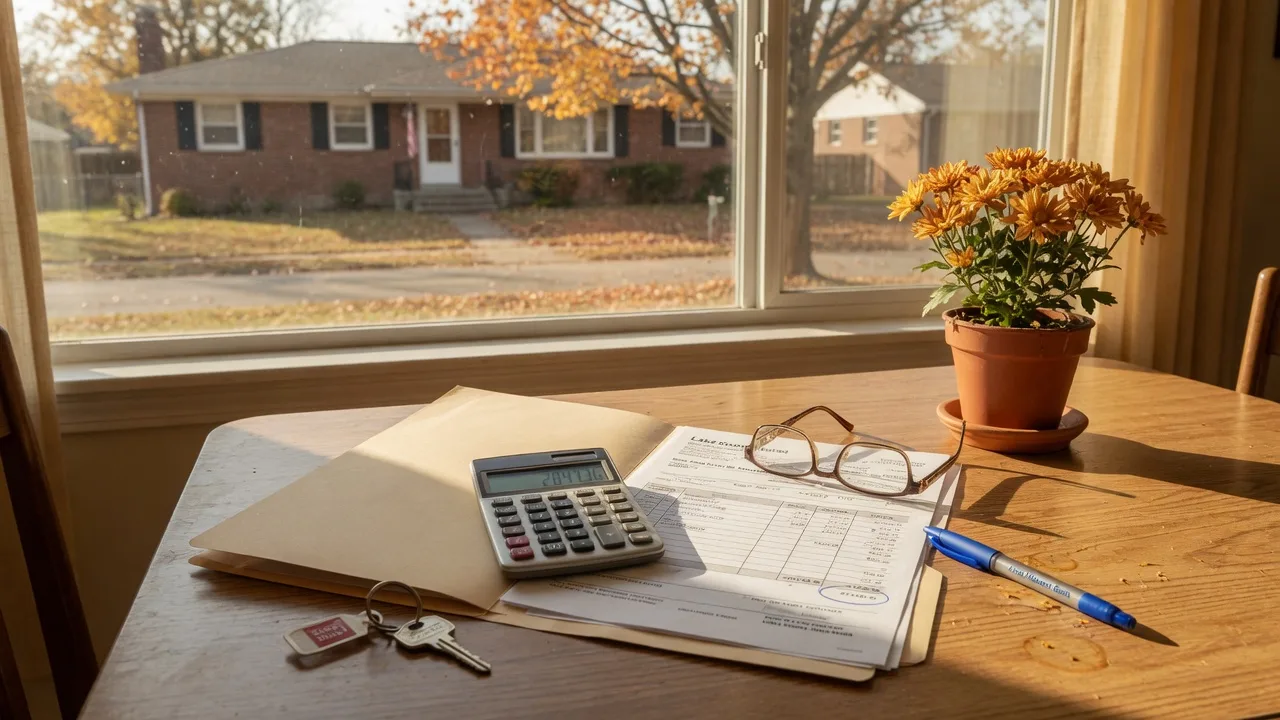
Winter is when the property tax notices and the year-end paperwork land in Northwest Indiana mailboxes, and for homeowners 65 and older that paperwork can mean real savings. Indiana offers two senior-specific credits on top of the homestead deduction every owner-occupant should have. Here is who qualifies, what the numbers are, and exactly where to file in Lake, Porter, and LaPorte counties.
At the Golden Girls of Real Estate, the tax question comes up in almost every senior conversation, whether the plan is to stay, sell, or downsize. The good news is that the biggest savings are usually a paperwork exercise, not a debate. The better news is that the deadline shows up once a year, so a family that learns the rhythm now never misses it again.
Key Takeaways
- ✓The Over 65 Credit is a flat $150 credit on the property tax bill of a qualifying senior's primary residence
- ✓The over-65 Circuit Breaker Credit caps a qualified homestead's tax increase at 2% over the prior year
- ✓Both credits and the homestead deduction are filed through the county auditor, with January 15 the key deadline in most counties
- ✓Income limits are $60,000 for single filers and $70,000 for married couples filing jointly
- ✓Selling or downsizing resets the credits, so file again at the county auditor in the new home's county
The Two Senior Credits, in Plain English
The first is the Over 65 Credit, a flat $150 credit that comes straight off the property tax bill of a qualifying primary residence. To qualify, the homeowner must be at least 65 by December 31 of the year before applying, own or be buying the home, and have federal adjusted gross income at or below $60,000 for a single filer or $70,000 for a married couple filing jointly. A surviving spouse who is at least 60 and not remarried can also qualify in many cases.
The second is the over-65 Circuit Breaker Credit, which caps the property tax on a qualified homestead so it cannot rise more than 2% over the prior year's bill. That cap is the protection families notice most in years when assessments jump. The income test is the same $60,000 and $70,000 limits, and it is measured on income from two years prior, so the auditor looks at an older tax return, not last spring's.
The Homestead Deduction Everyone Should Have
Before any of the age-based credits, every owner-occupied home in Indiana should carry the homestead deduction, the base deduction that lowers the assessed value that gets taxed. It has no age or income test, but it is not automatic. If a home does not have one on file, the owner pays on a higher assessed value than the neighbors do. Our in-depth guide to Indiana tax benefits for senior homeowners walks through every deduction and credit line by line, including the ones that apply before age 65.
The January 15 Deadline and Where to File
Both senior credits and the homestead deduction are filed with the county auditor, not with the state, and the date that matters is January 15 in most counties. File by then and the credit lands on that year's bill; miss it and the wait runs a full year. A handful of counties treat December 31 of the prior year as the statutory deadline, so the safe habit is to file in early January or confirm the exact date with your county office.
In Northwest Indiana, that means the Lake County Auditor in Crown Point, the Porter County Auditor in Valparaiso, or the LaPorte County Auditor in LaPorte. Most offices publish the forms online, and all three answer questions by phone. When in doubt, start with the Indiana Department of Local Government Finance, which publishes the current deductions and credits in plain language.
What Changes When You Sell or Downsize
The senior credits and the homestead deduction attach to a primary residence, so they do not travel with the seller after closing. Once the next home is purchased in Indiana, the new homestead deduction, and the age and income credits if they apply, need a fresh filing with the county auditor in the new county. For families moving from a family home into a ranch, condo, or 55+ community, that is one more line on the transition checklist, and it is easy to miss in the shuffle of moving boxes.
Homeowners weighing whether to stay or go can see the whole picture in our realistic guide to the cost of retiring in Northwest Indiana, which folds property taxes, credits, and everyday living into one budget. And when the paperwork of a move needs a home, our guide to the family home financial files shows where the deed, tax, and insurance records live and how to keep them organized through a sale.
"Every January we remind the families we work with: the credits are real, the deadline is real, and the application takes an afternoon, not a week. File early, keep the receipt, and check the next bill. It is one of the kindest financial gifts a family can give a senior who owns a home."
The Golden Girls of Real Estate
How the Golden Girls Help
The tax filing is the county auditor's job, and the planning around it is ours. We help families weigh the credits they would keep by staying against the freedom of selling, compare the real tax picture of one community versus another, and time a sale and a purchase so the homestead deduction and the senior credits move smoothly between homes. Kathleen Keilman, our senior transition specialist, and Becky Wright, our Seniors Real Estate Specialist, work with home-owning seniors across Lake, Porter, and LaPorte counties every week. Start through our contact page and tell us which county the home is in.
Related Resources
- ✓Indiana Tax Benefits for Senior Homeowners the full line-by-line guide for Lake, Porter, and LaPorte counties.
- ✓The Cost of Retiring in Northwest Indiana housing, taxes, healthcare, and everyday living in one plan.
- ✓The Family Home Financial Files where the deed, mortgage, tax, and insurance documents live.
- ✓Meet Kathleen Keilman our senior transition and first-time buyer specialist.
- ✓Contact the Golden Girls for a no-pressure look at the numbers for your home.
For the official numbers and forms, the Indiana Department of Local Government Finance publishes the current deductions and credits, and the AARP Foundation Property Tax-Aide keeps an independent state-by-state summary for older homeowners.