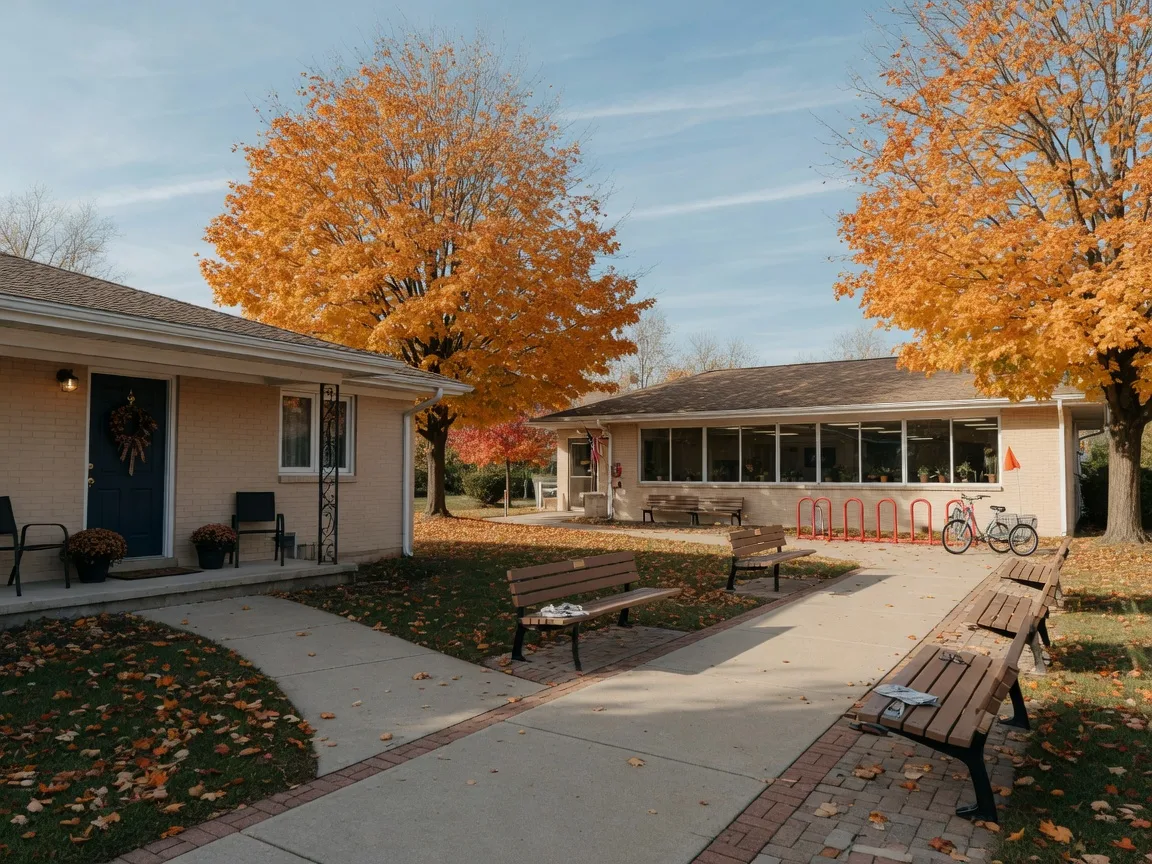
An ordinary week in a 55+ community in Northwest Indiana is quieter than the brochure and fuller than you might fear. There are clubs, card games, and coffee hours if you want them, and there is also plenty of simple privacy, no lawn to mow, and a neighbor who notices when your driveway snow has not melted by noon. This realistic look at active adult living helps you and your family decide whether communities in Schererville, Valparaiso, and Crown Point fit how you actually want to live.
The Golden Girls of Real Estate tour 55+ neighborhoods across Lake and Porter counties with seniors and their adult children every month, and the questions are always the same underneath: Will I be lonely? Will I like my neighbors? Is the fee worth it? Here is what the calendar really looks like once the boxes are unpacked.
Key Takeaways
- ✓ Social life in a 55+ community is optional: you set the pace, and quiet privacy is respected
- ✓ The monthly fee covers exterior care, snow, roofs, and common areas, and it can rise, so ask for the last three years of increases
- ✓ Adult children and grandchildren can visit and stay over freely; age rules apply to residents, not guests
- ✓ The age rule lives in the governing documents, so read them in writing before making an offer
- ✓ The Golden Girls compare communities side by side, from Schererville to Valparaiso, at your pace
What an Ordinary Week Really Looks Like
Monday starts with a walk on the paved paths before the day heats up, coffee in the clubhouse if you feel like company, and a quiet afternoon reading on your own porch. Wednesday there might be a card group or a line-dancing class in the multipurpose room. Saturday the grandchildren come over for a sleepover, and Sunday is mostly quiet, with the association handling the mowing and the snow.
That rhythm is the point. The community outside your door is a menu, not a schedule. Some residents are at every event, some wave from their driveway and nothing more, and both are welcome. In our tours across the region, the residents who are happiest are the ones who matched the community's energy to their own, whether that is a lively clubhouse in Schererville or a quieter village-style neighborhood near Valparaiso.
The Clubhouse Question: Social Life on Your Terms
The clubhouse, pool, fitness room, and activity calendar are the parts families worry about the most, and the parts that matter the least on day one. Ask the salesperson how many events ran last month, then ask a resident how many they actually attended. The honest answer, almost every time, is that participation varies widely and that is by design. Loneliness is rarely solved by a building anyway; it is solved by neighbors who notice when your porch light is off, and 55+ communities have that in abundance.
The Fee Reality: What You Pay For and What You Do Not
The monthly association fee is the detail adult children ask about first, and it is the detail most worth understanding before you fall in love with a floor plan. In most Northwest Indiana 55+ communities the fee covers the exterior of the home, the roof, snow removal, lawn care, and the common areas, with many associations also funding the clubhouse, pool, and planned activities. It can go up each year, so ask for the last three years of increases and for any planned special assessments.
Inside the home, you are responsible for what you always were: utilities, appliances, interior repairs, and your own groceries. Compare the fee against what you currently spend on maintenance, snow, and yard care for the family home, and the value usually becomes obvious. Our guide to what 55+ community fees really pay for walks through the numbers before you ever tour.
The Age Rule, Explained Plainly
Yes, many 55+ communities have a real age rule, and it is simpler than it sounds. Under the federal Housing for Older Persons Act, a community may require that at least one person in a household be 55 or older, with limited exceptions for younger spouses and some caregivers. Guest rules are different: adult children and grandchildren can visit, stay overnight, and celebrate holidays with you in most communities, so ask about guest parking while you tour.
The exact occupancy rule lives in each community's governing documents and deed restrictions, not in a statewide law, so ask for those documents in writing before you make an offer. A careful read now prevents surprises at closing. Our first-tour checklist for 55+ communities lists the exact questions to ask, and our aging in place versus 55+ community comparison helps you weigh staying put against the move.
The Honest Trade-Offs Worth Making
Moving to a 55+ community trades some freedom for a lighter load. You trade the full run of the family house for a smaller home that fits your real life, the privacy of a big yard for a shared lawn that someone else mows, and total control of every decision for a board that keeps the neighborhood neat. For most retirees the trade is a good one; for a few it is not, and both answers are respectable. The only wrong move is making the decision from a brochure instead of a visit.
"Fifty-five is not a finish line. It is a starting line for the next decade, and the right community makes sure you do not run it alone unless you want to."
The Golden Girls of Real Estate
The best way to test all of this is to visit, twice, once on a weekday and once on a weekend, and to talk to residents, not just the salesperson. When you are ready to compare communities for real, contact the Golden Girls and we will tour with you across the region and run the numbers side by side. No pressure, just the honest picture.
Related Resources
What 55+ Community Fees Really Pay For the plain-English numbers before you tour. Your First Tour of a 55+ Community what to look for, ask, and photograph. Aging in Place vs. 55+ Community weigh both paths with real trade-offs. Valparaiso Community Guide active adult options in Porter County. Contact the Golden Girls to plan a tour across Northwest Indiana.
For independent perspective on housing options in later life, AARP offers housing and livability guides, and the National Association of Realtors publishes research on senior housing trends across the country.