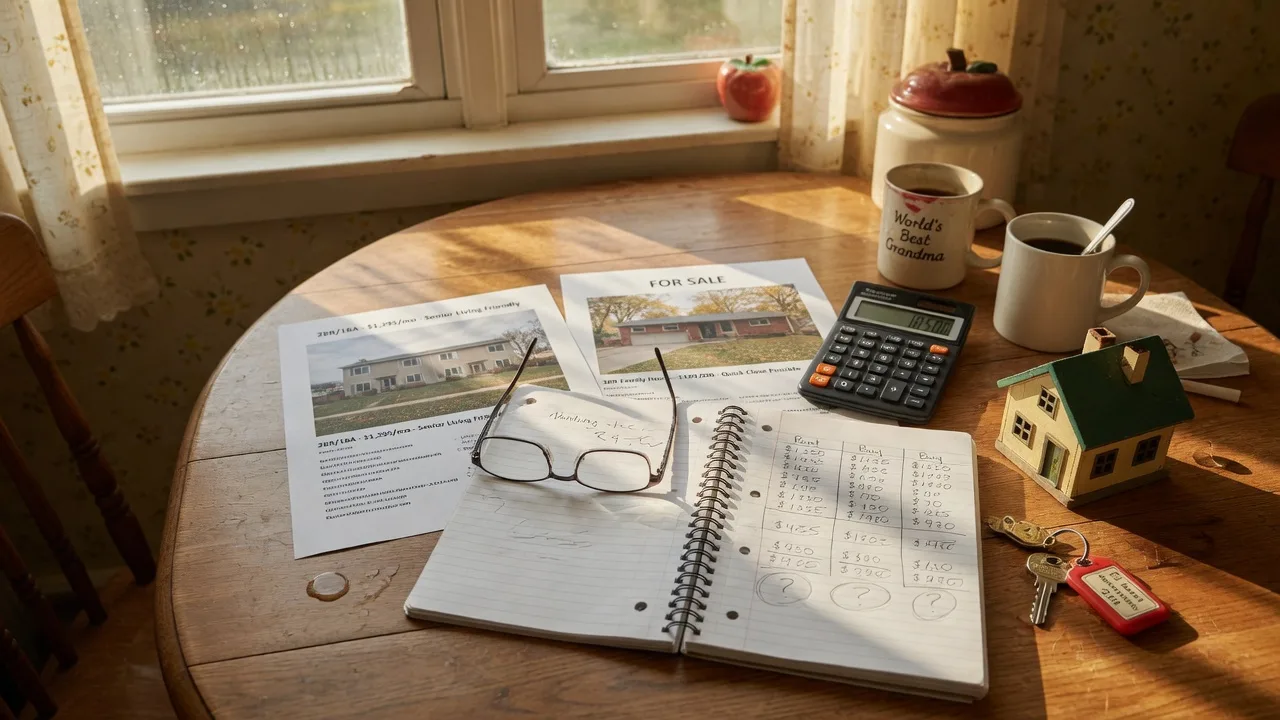
The family home has sold, the proceeds are in savings, and now comes the question every senior faces next: should the next home be rented or bought? It is one of the most personal decisions in real estate, and the honest answer is that there is no right choice for everyone. This guide lays out the two columns of the decision, the monthly math, and the questions that help families across Northwest Indiana choose with confidence.
At the Golden Girls of Real Estate, we walk seniors and their adult children through this exact decision in Munster, Crown Point, Valparaiso, Michigan City, and every community between. Most families find that once the numbers are on the table, the right answer becomes clear.
Key Takeaways
- ✓Renting frees a senior from maintenance, property taxes, repairs, and one predictable monthly payment
- ✓Buying can keep monthly costs stable, build equity, and give a senior total control over their home
- ✓The real comparison is monthly: rent plus renters insurance versus mortgage, taxes, insurance, HOA fees, and upkeep
- ✓A one or two year rental is a wonderful try-before-you-buy in a new town, with the sale proceeds held safely in savings
- ✓There is no universal right answer; health, savings, family proximity, and flexibility all shape the decision
The Two Columns of the Decision
Think of the decision as two columns on a piece of paper. The renting column holds one predictable monthly payment, a landlord who handles the furnace and the roof, and the freedom to move again in a year or two. The buying column holds a stable payment, equity that grows, and complete control over paint, plants, and every wall. Neither column is better on its own; the right one is the one that fits the senior's life. For the broader money picture around this decision, our financial comparison of selling the family home for a retirement community walks through the numbers when a move is on the table.
What Renting Gives You
Renting is freedom from ownership. No property tax bills, no HOA special assessments, no call to a roofer at 2 a.m., and no surprise that the water heater is twenty years old. One monthly rent check covers a roof over the head, and the landlord handles the rest. For a senior who has spent decades keeping a house and now wants to spend the next chapter differently, that simplicity can be the whole point. Many seniors also love that renting makes it easy to test a new town before committing to it.
What Buying Gives You
Buying gives a senior a place that is truly their own. The payment can stay steady while rents climb, the home can grow in value, and there is no landlord to call or lease to renew. For a senior who wants to put down roots, paint the walls, plant a garden, and know that no one can sell the building out from under them, owning is worth a great deal. A ranch or a condo is often the perfect fit, and our ranch versus condo rightsizing guide and our two-story versus ranch guide compare the most popular next homes side by side.
The Monthly Math That Matters
The number that matters most is the true monthly cost of each choice. Renting is the rent plus renters insurance. Buying is the mortgage, the property taxes, the homeowners insurance, the HOA fees, and a realistic allowance for upkeep and repairs spread across the year. In many Northwest Indiana towns, the owning column can still come out ahead, but only when every line is counted. Our realistic guide to the cost of retiring in Northwest Indiana folds housing, taxes, and everyday living into one budget families can compare.
Rent First, Buy Later: The Try-Before-You-Buy Plan
For many families, the wisest sequence is to rent first and buy later. A one or two year rental in a town like Valparaiso, Crown Point, or Michigan City lets a senior test the community, the winters, the commute to family, and the day-to-day before buying. The sale proceeds can sit safely in savings, earning a little interest while the decision is tested, and the senior buys only when the town feels like home. It turns one big decision into two smaller ones, and it is one of the kindest plans we recommend.
The Questions That Should Shape the Answer
A handful of questions point most families toward the right answer. How much does the senior value freedom versus roots? How are their health and mobility today and in the next few years? How close is family, and how much does the senior want the option to move closer? How much monthly breathing room do the numbers allow, and does the senior want to leave the equity invested or use it for a home? Talking these through together, with a Realtor who works with seniors and, when the sums are large, a financial advisor, turns a daunting choice into a clear one.
"There is no shame in renting at any age, and no rule that says a senior must own. The right home is the one that lets the next chapter feel free. We have seen seniors flourish in both columns, and the ones who do best are the ones who matched the choice to their life, not to an expectation."
The Golden Girls of Real Estate
How the Golden Girls Help
We put both columns on the table: the true monthly cost of renting in the towns the senior likes, and the true monthly cost of buying the right ranch or condo there. We tour rentals and homes, pull current market numbers, and walk through the trade-offs honestly, no pressure. Reach us through our contact page and tell us the town and the time frame, and we will bring the numbers.
Related Resources
- ✓The Cost of Retiring in Northwest Indiana housing, taxes, and everyday living in one budget.
- ✓Ranch or Condo? the two most popular rightsizing choices compared.
- ✓Selling the House to Fund a Retirement Community the financial comparison families ask about most.
- ✓The 60-Day Downsizing and Moving Calendar week-by-week steps for the whole transition.
- ✓Contact the Golden Girls for a no-pressure look at your columns.
For an independent look at the numbers, AARP explains whether you should rent or buy your next home, and its relocation guide for retirees facing the same decision offers a helpful second perspective.