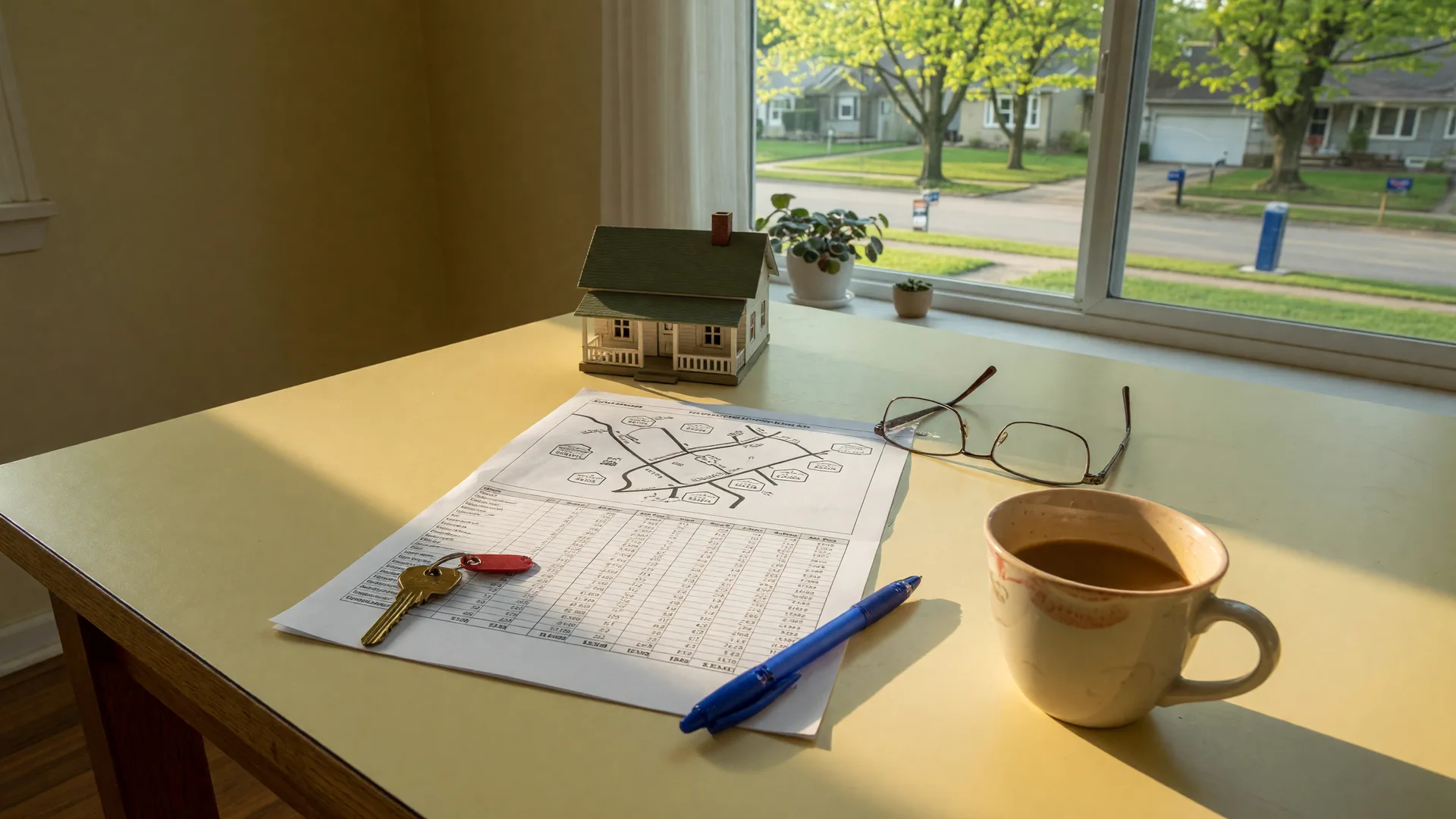
How much is the family home worth? It is the first question in nearly every senior real estate decision, whether the family is considering a reverse mortgage, planning a move, or dividing an estate. This guide explains in plain English how a home's value is determined, what a comparable market analysis, or CMA, really tells you, and how families across Lake, Porter, and LaPorte counties can use one to decide with confidence.
A number on a website is a starting point. A market analysis done by a Realtor is the starting point families can actually plan around.
Key Takeaways
- ✓ Home value comes from what buyers have recently paid for similar homes nearby
- ✓ A comparable market analysis compares sold, pending, and active listings, then adjusts for differences
- ✓ Online estimates and tax assessments can disagree with a market analysis, and the reasons are worth understanding
- ✓ A CMA is free from a Realtor, while a formal appraisal is ordered by a lender and paid for by the buyer
- ✓ Getting a current market analysis before any big decision protects the family from acting on stale numbers
Where Home Value Actually Comes From
In a normal market, a home is worth what buyers have recently paid for comparable homes in the same neighborhood. The three groups of evidence a Realtor uses are recent sold homes, pending sales, and active listings. Sold homes show what buyers have actually agreed to pay, pending sales show what is closing right now, and active listings show the current competition. Together they tell a far more honest story than a single number.
What a CMA Compares, and How
A market analysis starts with the home itself and finds the closest comparable properties: similar bedrooms, bathrooms, square footage, lot size, condition, and updates. Each difference is then adjusted up or down in dollars, so a home with a new roof compares fairly against one without. The result is a defensible range and a suggested listing price, which is why a good CMA is a conversation, not a single line. Our guide to senior home values and market trends in Northwest Indiana shows how the current regional picture affects those comparisons.
Why Online Estimates and Tax Assessments Disagree
Online estimates use automated models built from public records and their own sales data, and they can miss a remodeled kitchen, a finished basement, or a challenging lot. Tax assessments are set by the county for the purpose of levying property tax, not for pricing a home for sale. In Munster, Crown Point, and Schererville, these tools can each tell a different story, which is why a Realtor's analysis is the number that matters most before a decision.
A CMA vs. an Appraisal
A CMA is prepared by a Realtor from market data and is free. A formal appraisal is prepared by a licensed appraiser, ordered by a lender, and paid for by the borrower, usually several hundred dollars. Lenders require an appraisal before approving a mortgage, while families use a CMA for planning, pricing, and comparing options. In a fast-moving market, a Realtor's current CMA can even read fresher than an appraisal written months earlier.
Use the Number Before You Decide
Every senior real estate choice turns on the home's value: whether to sell and downsize, tap equity, or rent the home out. Knowing the real number, and the reasoning behind it, lets a family plan instead of guess. Our guide to what to ask a Realtor before selling a senior's home lists the questions that turn a market analysis into a plan, and our guide to preparing a home for sale shows how small updates affect the number.
"A market analysis is more than a price. It is the family's permission to plan, because for the first time they are making decisions from what the market actually shows, not from a guess or a hope."
The Golden Girls of Real Estate
Related Resources
Senior Home Values and Market Trends a look at what is moving prices in Northwest Indiana. Questions to Ask a Realtor a checklist for families selling a senior's home. Preparing a Home for Sale what is worth doing before listing. Contact the Golden Girls for a free market analysis on the family home.
For reliable guidance on buying and selling, the National Association of Realtors and the official State of Indiana website publish useful, plain-language resources for homeowners and families.