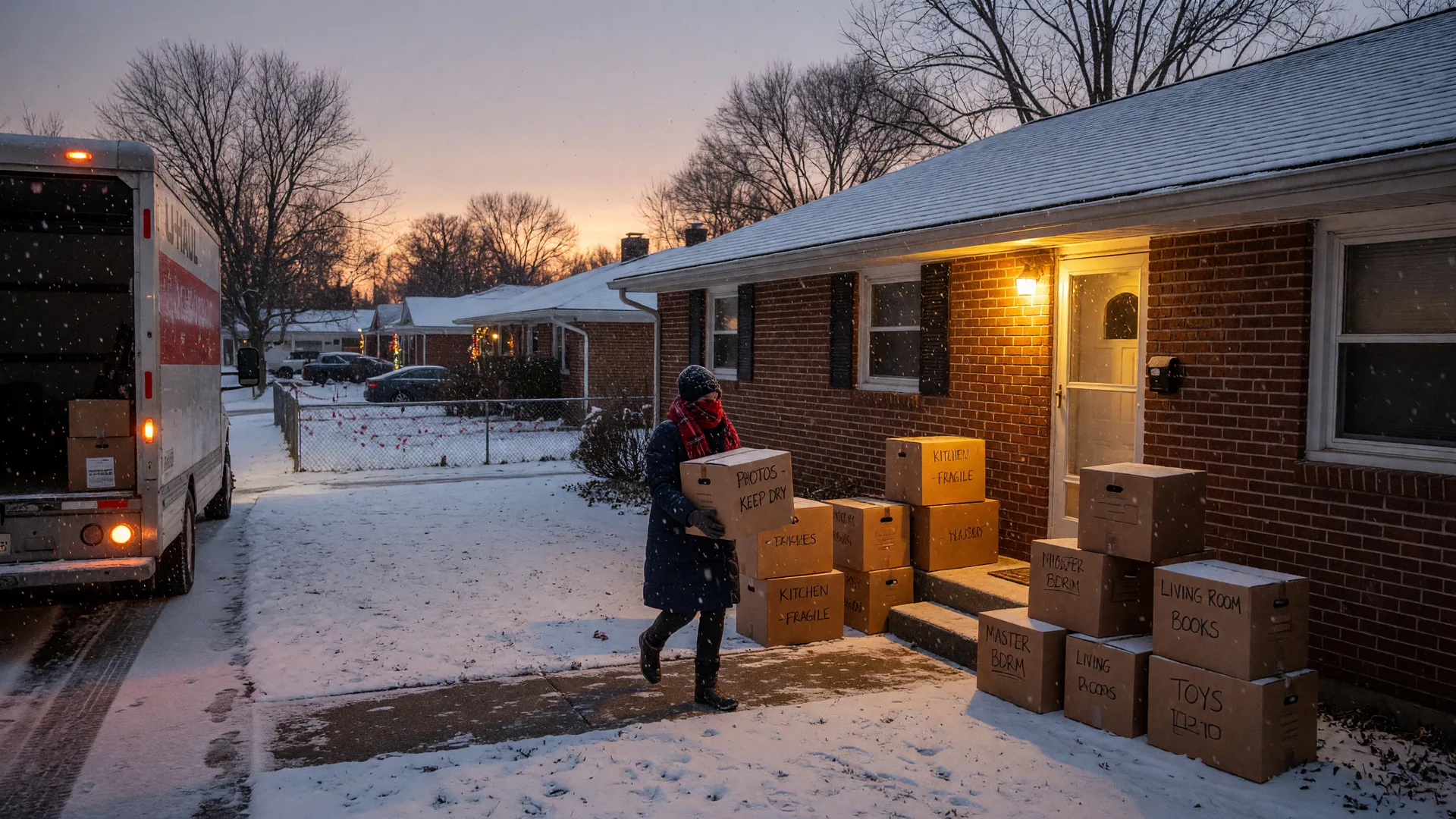
A move does not wait for May, and neither do many Northwest Indiana families. A closing that lands in December or January, a retirement community with an opening in February, or a parent who is simply ready means the moving truck rolls up in winter. This checklist helps families plan a senior move across snow and ice with as much warmth as efficiency, for Lake, Porter, and LaPorte counties.
At the Golden Girls of Real Estate, we help families across Munster, Crown Point, Valparaiso, Highland, Michigan City, and every town between coordinate winter moves with care. A winter move asks for more logistics and fewer surprises, and a good checklist turns both into a plan.
Key Takeaways
- ✓Book the movers early and build extra slack into the schedule for weather and short daylight
- ✓Confirm the heat transfer dates for both houses in writing so there is never a cold gap
- ✓Salt and sand the walk, the driveway, and the steps on moving day and keep the senior off the ice
- ✓Pack a first-night bag for the cold: warm layers, meds, slippers, a flashlight, and a phone charger
- ✓Protect the senior's energy and comfort through the chaos, and let the team do the heavy lifting
Weather-Proof the Plan First
Winter moves are won before the truck arrives. Book the movers early, because December and January fill up fast, and choose a window with some daylight. Watch the forecast for the week around the move, and have a backup day in mind for a major storm. Build slack into the whole schedule: an extra hour for loading, an extra hour for travel, and an extra hour for the walk between the truck and the door. Nothing about a winter move needs to be rushed, and the calm comes from planning for the weather instead of fighting it.
Utilities, Heat, and the Empty House
The two dates that matter most in a winter move are the day the heat transfers out of the old house and the day it turns on in the new one. A gap in either is the worst outcome for a senior in January. Confirm both dates in writing, ask whether the new home's furnace and water heater have been serviced, and arrange for someone to check on the empty house so the heat and the pipes stay safe. Our guide to winter readiness for a senior home covers the cold-weather details that protect a house through the season.
Packing for Cold, Not Just for Boxes
Pack the essentials so they are reachable the moment the door opens, and pack for the cold specifically. Warm blankets and layers, the medications with a full list, toiletries, slippers, a flashlight, a phone charger, and a thermos of something hot all belong in the first-night bag in the car, never in the truck. Keep a folding chair and a small table near the door of the new house so the senior has a place to sit while the rooms fill in. Our week-by-week senior moving checklist and our 60-day moving calendar keep the packing and the paperwork on schedule.
Moving Day in Snow: The Game Plan
The morning of the move, salt or sand the walk, the driveway, and the porch steps, and do it again if the weather turns. Ask the movers to clear a clean path from the door to the truck and to place dry mats at both doors so snow is not tracked inside. Keep the senior off the icy surfaces entirely and let the movers do the carrying, because the fall nobody wants on a moving day is completely avoidable. If the move lands around the holidays, our guide to a smooth senior moving day walks through the whole day step by step.
The First Night Bag and the First Night
The first night in a new home in winter should feel like a warm welcome, not a camping trip. Unpack the first-night bag before anything else, make the bed, turn up the heat, and put a pot of tea or coffee on early. If the new home is a ranch, a condo, or a place in a 55+ community, the rooms will be smaller and easier, which is exactly the point of the move. Families across Northwest Indiana find that the new address quickly begins to feel like home when the first night is planned as carefully as the moving day itself.
Protecting the Senior Through the Chaos
A move is tiring for anyone, and it lands harder on a senior. Assign one family member to be the calm point person for the day, the one who answers the senior's questions, keeps them warm, fed, and rested, and lets the movers and the logistics hum along without them. If the family is stretched thin, a senior move manager can coordinate the details, and our guide to building your senior move team explains who does what, from the Realtor to the mover to the move manager.
"Winter moves are not harder because of the snow. They are harder because the calendar is full and the days are short, and both of those are fixed with a good plan. The families who move a senior in January with grace are the ones who started with a checklist, a first-night bag, and a pot of coffee."
The Golden Girls of Real Estate
How the Golden Girls Help
We help families line up the whole move, not just the sale. We coordinate with movers and move managers, confirm the utility and closing calendar, and connect families with senior resources across Lake, Porter, and LaPorte counties. When the new home is a ranch, a condo, or a place in a 55+ community, we help the family compare options and time the closing around the weather. For reliable winter home guidance, the AARP offers plain-language resources for older adults and their families. Start through our contact page and tell us when the move is happening.
Related Resources
- ✓Moving a Senior in November a week-by-week checklist for the colder months.
- ✓The 60-Day Downsizing and Moving Calendar every week straight, from first conversation to last box.
- ✓A Smooth Senior Moving Day the day-of game plan that keeps everyone calm.
- ✓Building Your Senior Move Team who does what, from Realtor to mover to move manager.
- ✓Contact the Golden Girls to plan a winter move with a team you trust.